How simple recognition metrics could save the peer-review system
Peer review is essential to scientific credibility, yet the system relies on labour that is largely unrecognised.
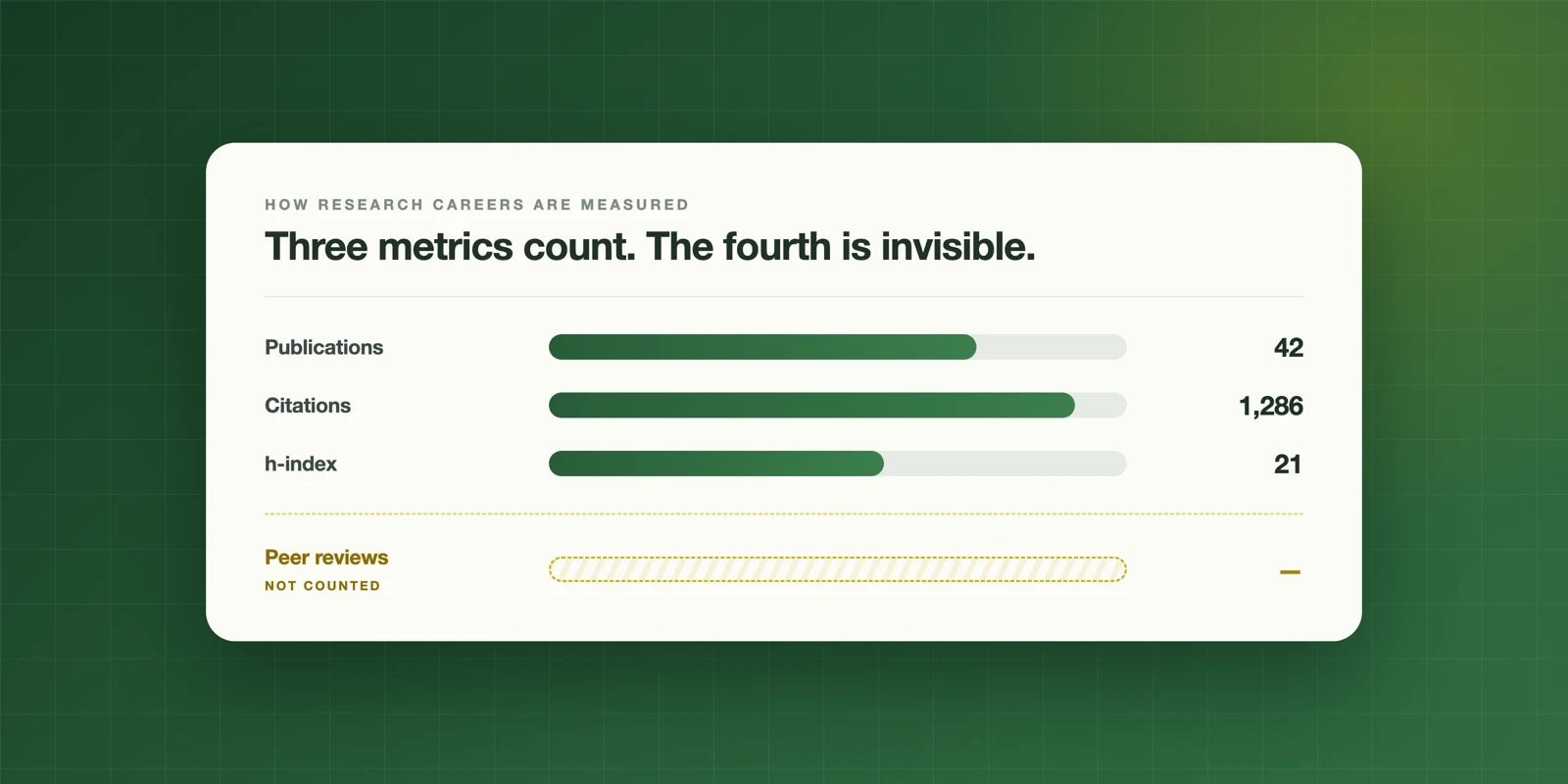
As an early-career researcher, I have been invited to review for reputable journals. It is work I value. But like many others, I cannot afford to overcommit to an activity that carries little weight in how academic success is evaluated. Publications, grants and awards determine careers; peer review, despite underpinning them, does not.
For the relatively small group of scientists who do accept review requests, the system is often all cost and little reward. Reviewing a paper properly can take hours, sometimes days, and is met with little more than a generic thank you. Yet if something is missed and a review is not sufficiently thorough in their evaluations, the consequences can be serious: unreliable, flawed, or even fraudulent science may be endorsed and pushed into the literature (or a valuable one does not get published).
Proposals to reform peer review are not new. Some have argued that reviewers should be paid, while others suggest credit-based systems in which researchers earn submission rights through reviewing. These approaches have merit, but they also face practical and cultural barriers, including funding constraints, coordination across publishers, and concerns about unintended incentives. We may not have the luxury of waiting for perfect solutions while the peer-review system continues to weaken.
A simpler first step is to give reviewers recognition for their contribution.
Academia already relies heavily on metrics to signal value such as publication counts, citation counts, the h-index, grant income. Why should peer review remain invisible? At minimum, researchers, institutions, funders and publishers could report verified reviewing activity alongside their publication records. More ambitiously, they could adopt simple indicators, such as a review-to-publication ratio, that reflect a researcher’s contribution to the collective functioning of science.
Such measures would be imperfect. They would not capture review quality and could be gamed if used uncritically. But if implemented transparently and used alongside existing indicators, they would explicitly quantify and recognise a form of academic labour that is both essential and systematically overlooked.
Peer review depends on a shared expectation of contribution. Without visible recognition, that expectation becomes increasingly difficult to sustain. Making reviewing count will not solve all of the system’s problems, but it is a pragmatic step towards restoring balance between what science demands and what it rewards.