Open scholarship, in practice: our first Open Scholarship Workshop
Twenty-three people, seven talks, three discussion tracks, one morning, and a concrete to-do list for open science at the U of A.
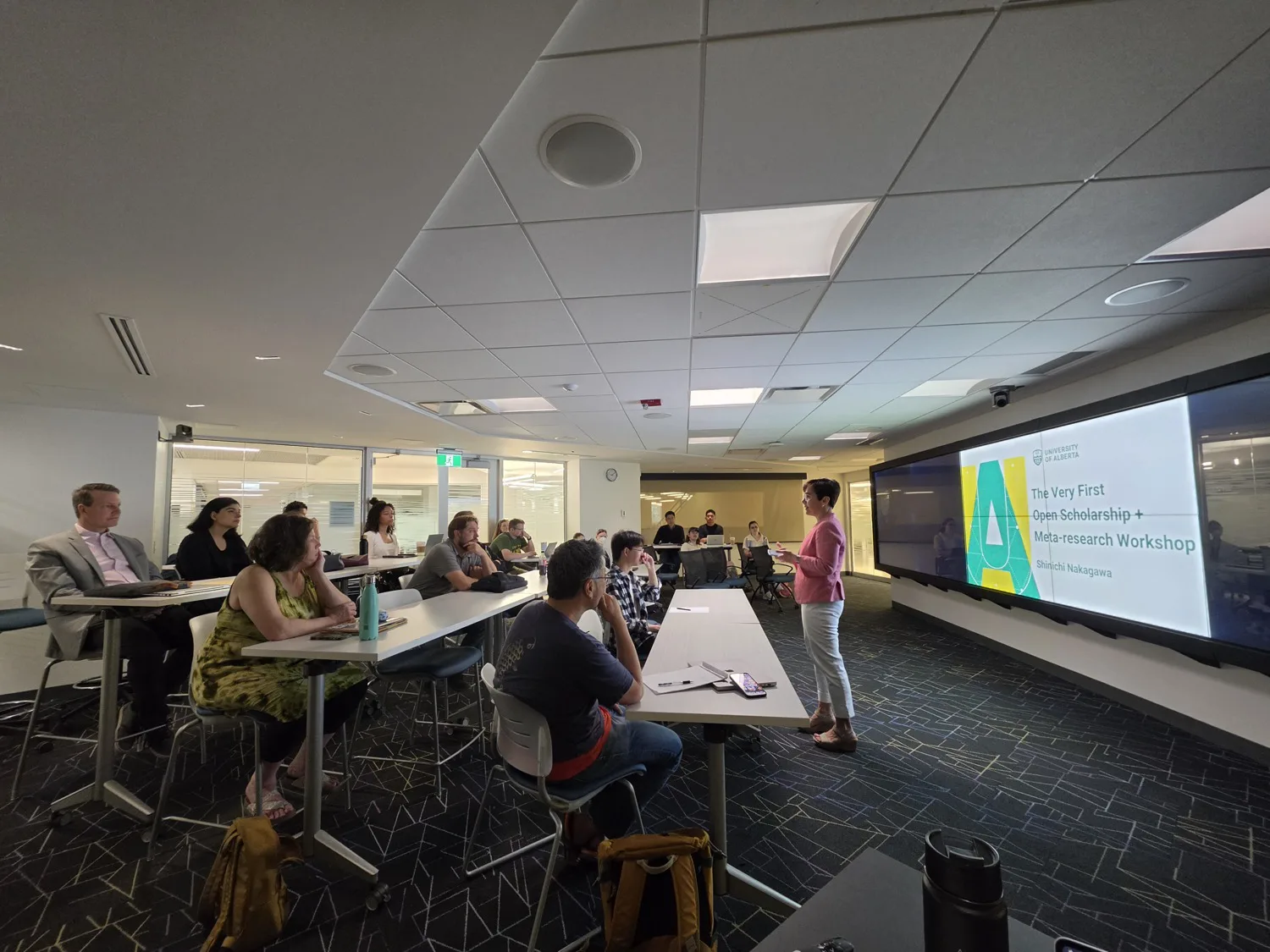
Open scholarship is easy to agree with and hard to do. The idea is simple: share the data, show the methods, make results available to the people who paid for them.
The hard part is incentives, infrastructure, and time. So on 28 May we set out to map what gets in the way at the University of Alberta, and what we could start fixing together.
How the morning ran
Dean of Science Matina Kalcounis-Rueppell opened the day. Shinichi Nakagawa set up the series: what open scholarship and meta-research are for, and what this working group hopes to achieve. Then came seven short talks, twelve minutes each, moving from the big picture to infrastructure, practice, and policy.
Seven talks, seven angles
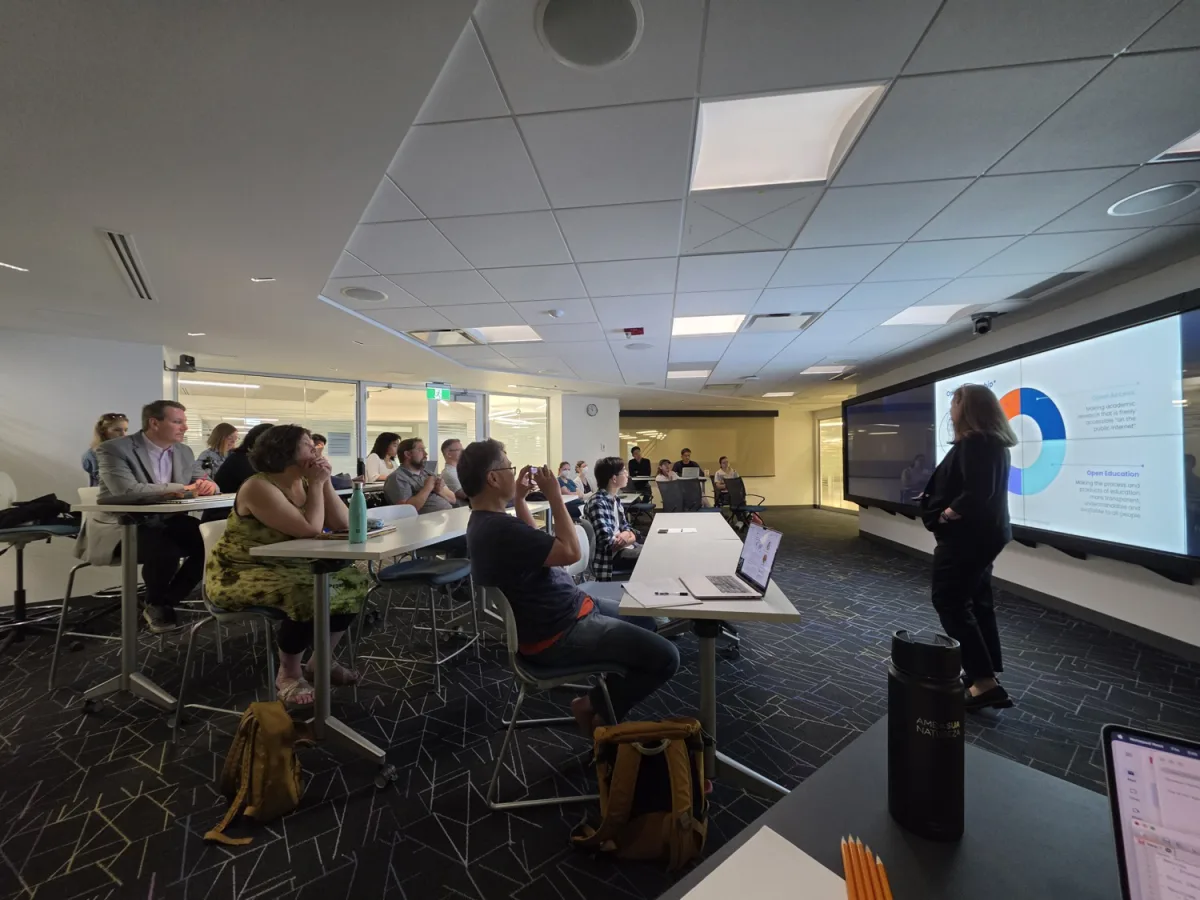
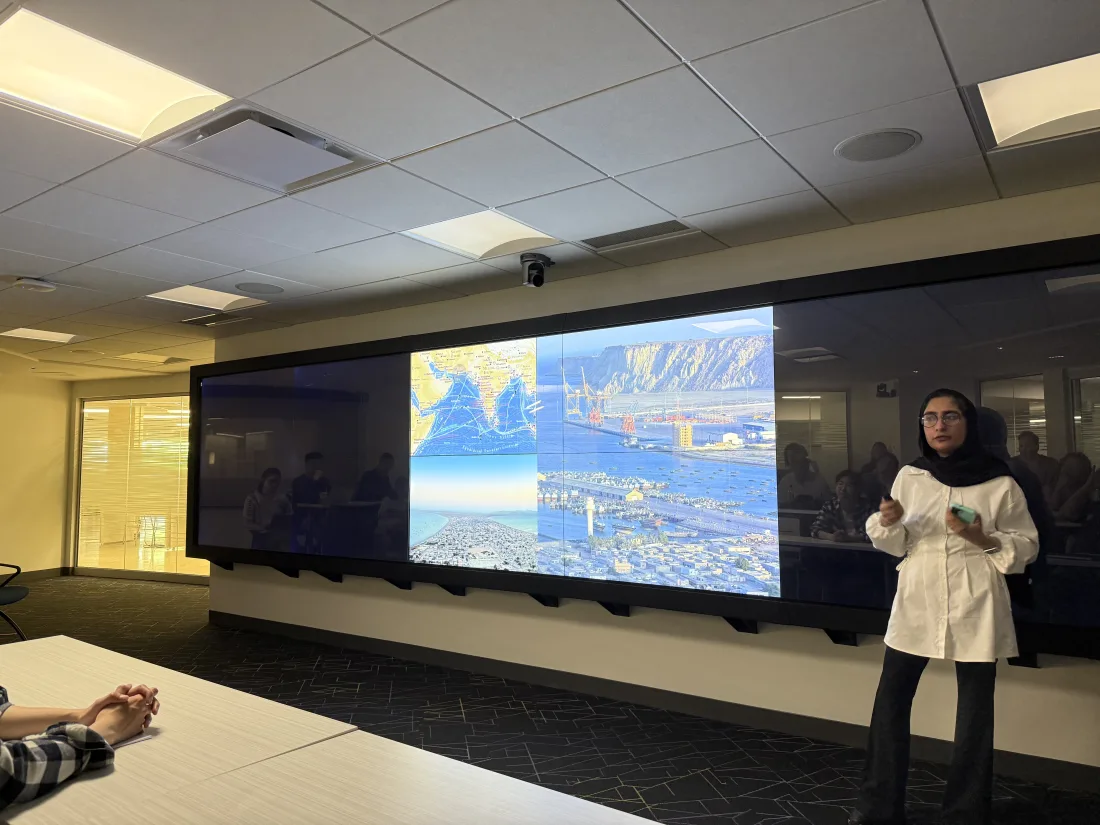
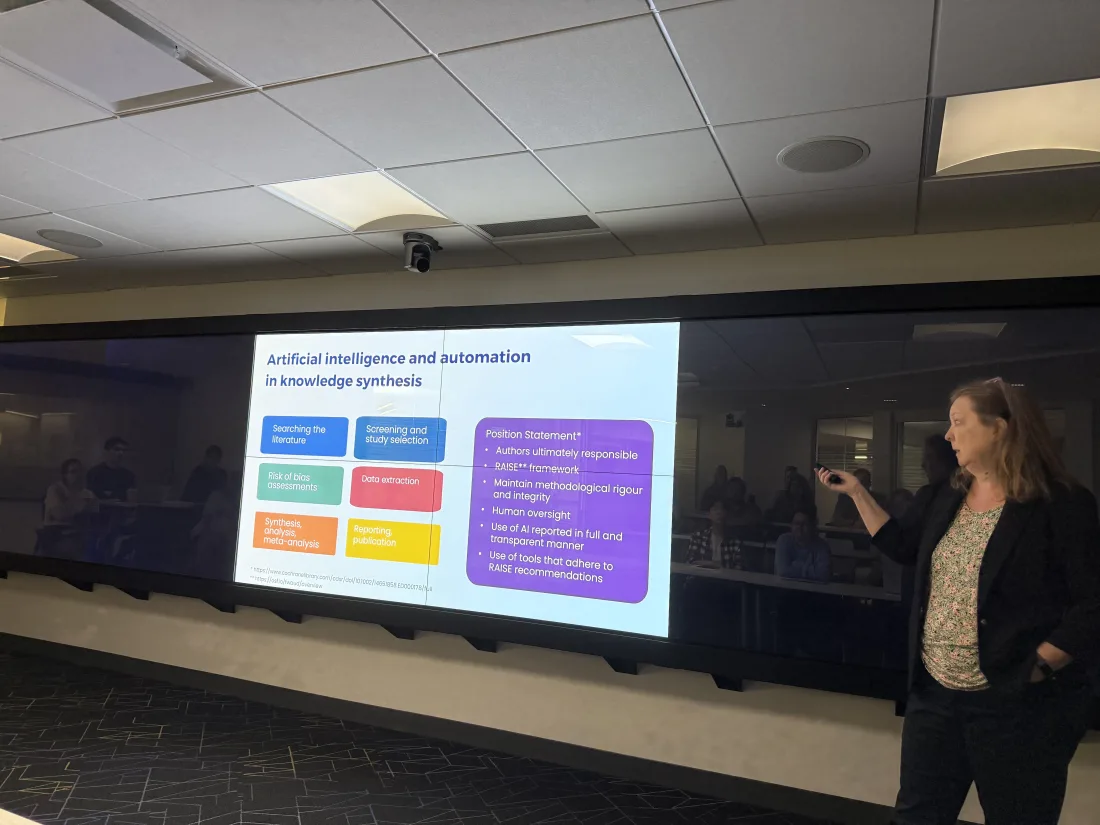
The seven talks came at open scholarship from very different directions. Mariyam Suleman opened with the question of who actually gets to take part in open science, drawing on a Global South perspective and the local knowledge the system tends to leave out. Sonya Betz turned to community-led publishing at UofA, including the Diamond open-access model, where neither authors nor readers pay. Lisa Hartling raised the problem of research waste, and the hard task of knowing when a line of inquiry is saturated. Erin Bayne showed what becomes possible when raw data is shared, using WildTrax as a working example in avian ecology.
The last three talks moved toward tools and policy. Karim Fouad described building and sustaining a shared Open Data Commons for spinal cord injury. Michael McNally examined how policy both shapes and constrains open practice. And Michelle Brailey closed with open education at UofA, from open textbooks to open pedagogy.
Three tracks, three problem sets
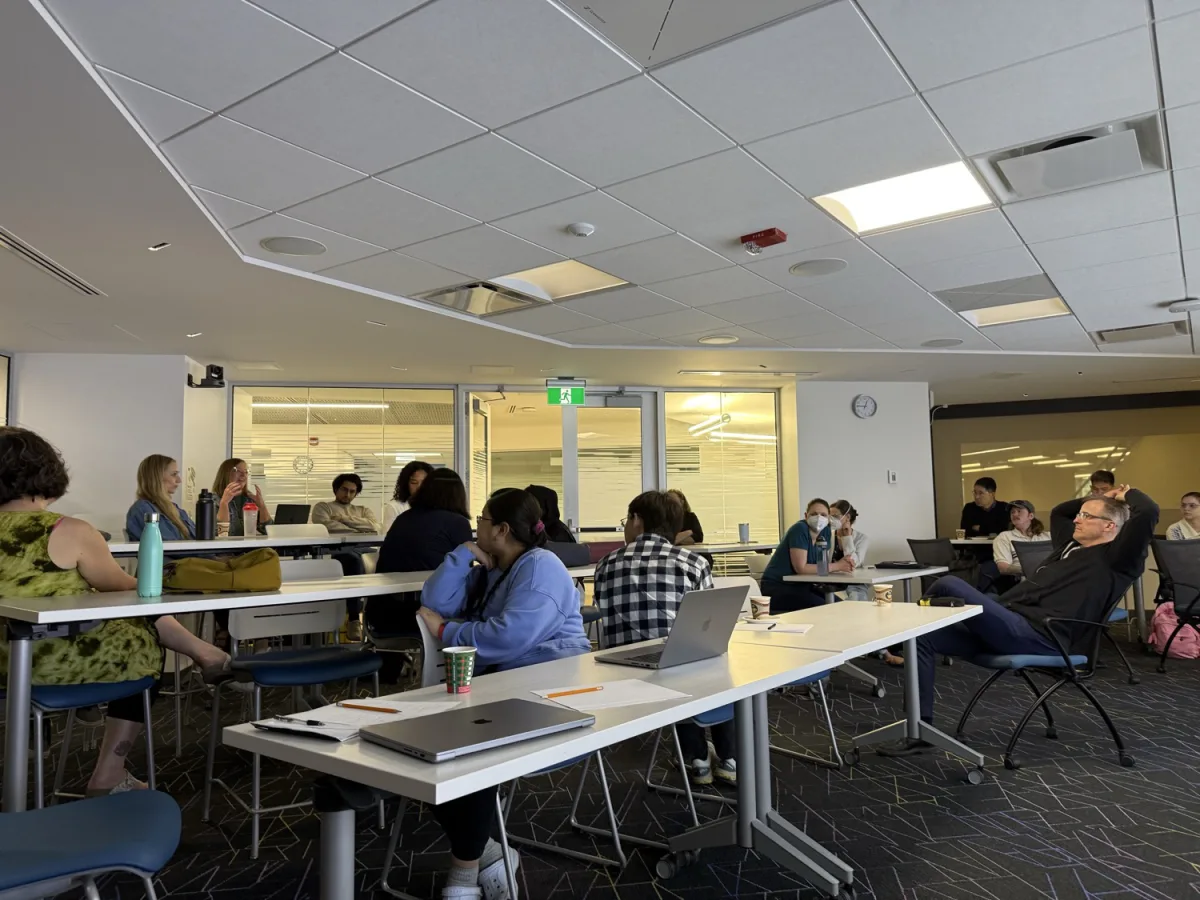
After a coffee break, we split into three discussion stations. Each had the same job: name the real barriers, then name what the group could act on.
Track A: Standards, data workflows, and pre-registration
How do you match up data standards across disciplines? The group looked at Australian pre-registration models Alberta could borrow from, and flagged a common habit: keeping datasets on local drives until publication, because the tools to share them are not there.
The recurring gap: almost no plain-language documentation. If you are not a computer scientist, navigating computing, storage, and data access is genuinely hard.
Track B: Policy, incentives, and peer review
Faculty metrics still reward impact factors and grant volume, almost the opposite of what open, collaborative work needs. There is real appetite to sign DORA (the San Francisco Declaration on Research Assessment), but UofA is not a signatory yet. Peer review also goes unrewarded; one idea is to build reviewer training into graduate curricula.
“We reward the metrics we can count, then wonder why the collaborative, open work is the first thing to get squeezed.”
Track C: Equity and education
Close the gap between stated values and actual policy: lobby the Tri-Agencies for relationship-building grants, embed open science in graduate training, and reward researchers who publish in Diamond open-access journals.
What we’re taking forward
From the three tracks, a handful of priorities rose to the top for the next session. Two are practical: plain-language guides to UofA’s data services, written for researchers rather than engineers, and a graduate module on open scholarship built together with Graduate & Postdoctoral Studies. Two are structural: a realistic framework for alternative impact metrics as a route toward DORA, and a small technical subgroup tasked with repository integration, streamlining data transfers between administrative portals, ERA, and Borealis.
Open science moves when a specific barrier gets specific people assigned to it. We now have a shortlist worth showing up for. Thanks to our speakers, our discussion leads, and the Digital Scholarship Centre for hosting. If you work on any of these problems at UofA, we’d like you in the room next time.