An early-career perspective on open, reliable and transparent research from the 2nd Canadian Open Science Conference
Reflections from a plenary talk in Ottawa: early-career researchers know what good research practices look like, but nobody fixes science alone.
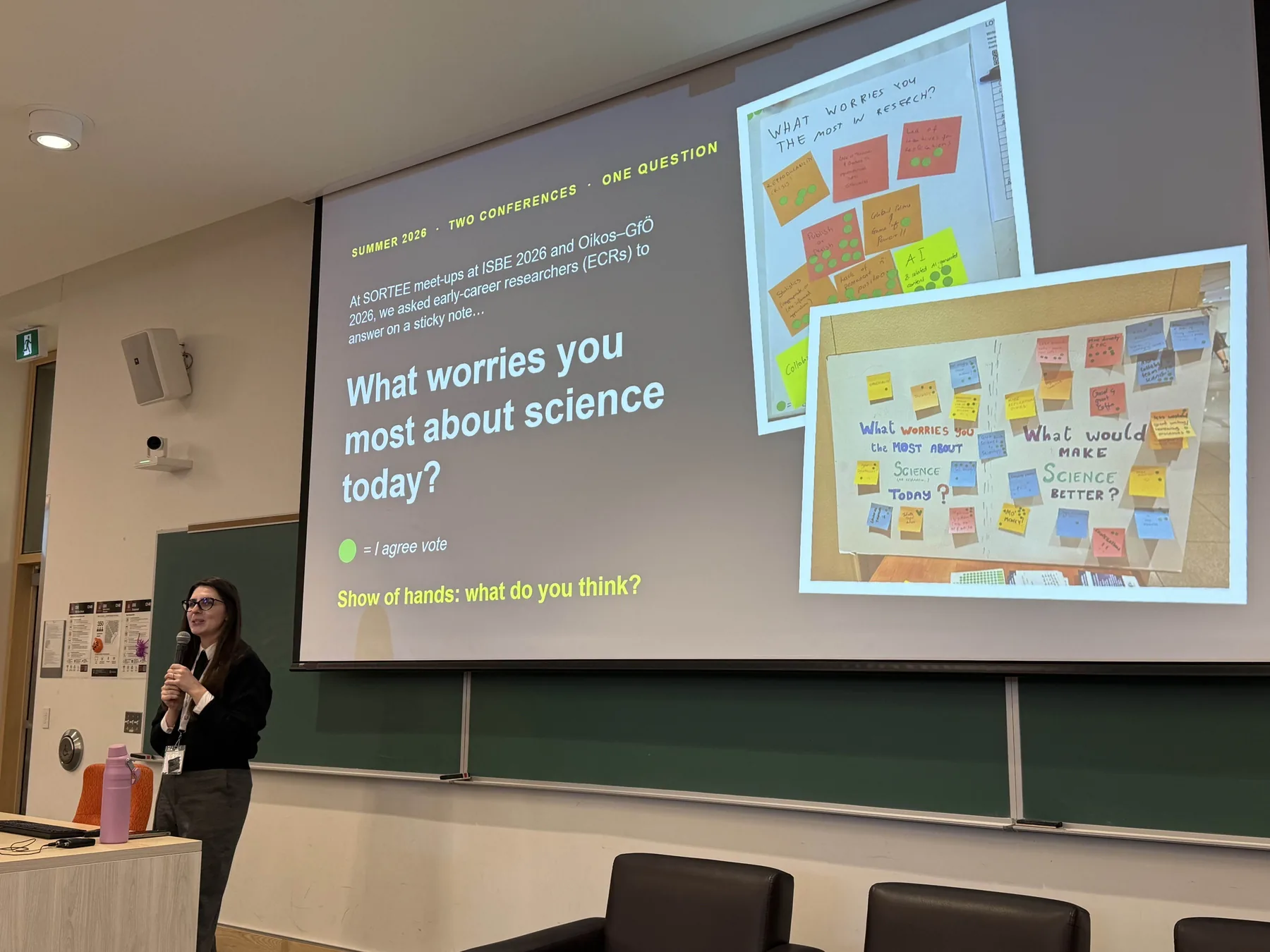
Last week I had the honour of delivering a plenary talk at the 2nd Canadian Open Science Conference in Ottawa! I talked about early-career researchers’ perspectives on open, reliable and transparent research practices, where my main message was “Nobody fixes science alone”.
A big thank you to Kelly Cobey and the organising team at the University of Ottawa for three fantastic days, and for making space for early-career voices in the programme.
What worries you most about science today?
My talk was inspired by two SORTEE (Society for Open, Reliable, and Transparent Ecology and Evolutionary Biology) meet-ups at the ISBE and Oikos–GfÖ conferences this summer, where we asked early-career researchers: “What worries you most about science today?”
The most common worry wasn’t reproducibility, transparency, data sharing or preregistration. It was job insecurity.
We know what good research practices look like
That answer became the heart of my talk. As early-career researchers (ECRs), we know what good research practices look like. We’re asked to:
- preregister our studies,
- share FAIR data and working code,
- publish null results,
- replicate important findings,
- you name it!
And we’re often doing all of this on one- or two-year contracts… Then, when we apply for jobs and funding, we’re judged largely on the number of papers we publish, journal prestige, novelty and grant income.
Nobody fixes science alone
We can’t “fix” the scientific system while our careers depend on incentives that are misaligned with open, reliable and transparent research. Real change needs funders, publishers, journals, institutions and research communities all moving in the same direction.
The ECRs at our SORTEE meet-ups seemed to agree. When we asked “What would make science better?”, the sticky notes with the most votes called for structural change, not more individual effort.
Communities are one piece of that puzzle, so I also talked about ours. In just five years, SORTEE has grown from a small network of like-minded researchers into a grassroots international community. Together, we’re working to make ecology and evolutionary biology more open, reliable and transparent. You can read more about that journey in our recent preprint on EcoEvoRxiv: ecoevorxiv.org/repository/view/15646.
To all of our SORTEE volunteers who make things happen in the Society, to everyone who contributed to the meet-ups at the ISBE and Oikos–GfÖ conferences this summer, and to all of our members, thank you!
A favourite moment
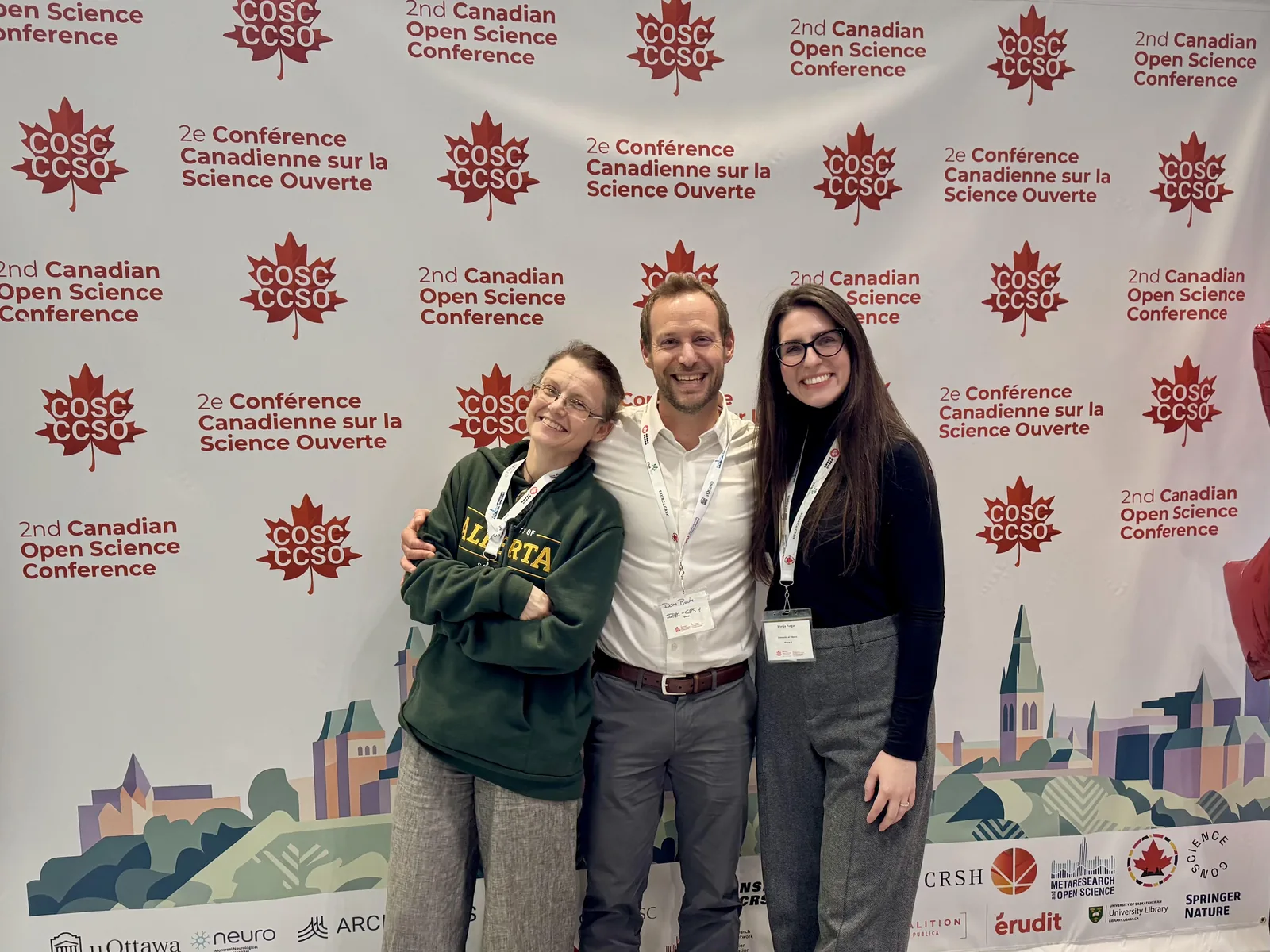
One of my favourite photos from the conference was with my dear SORTEE colleagues Losia Lagisz (President-Elect) and Dom Roche (one of our Past Presidents). It was my first time meeting Dom in person, after almost four years of Zoom meetings and working together in the Society. Standing there with them, I thought of one sticky note I would have added under the question “What would make science better?”: “Feeling less lonely”. “Feeling less lonely” is exactly what a community like SORTEE gives you.
If you’re an early-career researcher who wants to learn more about open, reliable and transparent research, come find us at sortee.org. After all, nobody fixes science alone.
And something that wasn’t part of my talk…
To finish, something that wasn’t really part of my talk but that I find myself thinking about almost every day: Never underestimate the impact of great supervisors. It really does go a long way!
A huge thank you to Antica Culina and Tin Klanjscek, who sparked my passion for open, reliable, and transparent research during my PhD and taught me that we can always do better when we work together.
Thank you to Joshua D. Wallach for sharing his insights and perspectives from the medical research field during my Fulbright fellowship.
And thank you to my current supervisors, Losia Lagisz and Shinichi Nakagawa, for welcoming me into their team and making this postdoc adventure such a wonderful learning experience.
I’ll leave you with a quote I keep coming back to:
“If you wish to build a ship, do not divide the men into teams and send them to the forest to cut wood. Instead, teach them to long for the vast and endless sea.”